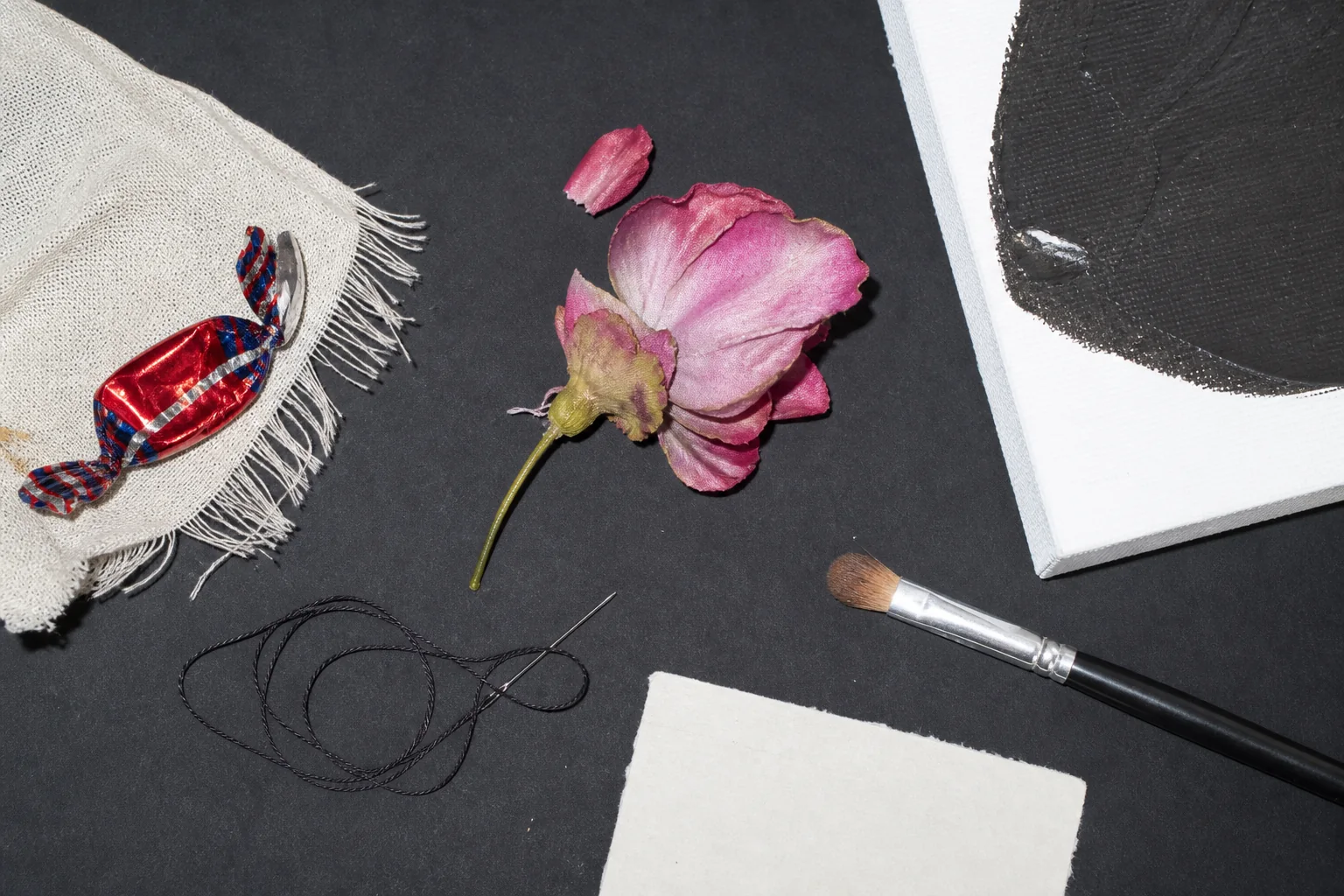
No Amayume handling guide
Real candy, wrappers, and adhesive joins create concentrated weight and fragile edges.
Support the garment from beneath, keep surface pieces from bearing against neighboring pieces, and photograph any change before repair.
Support the garment before touching surface material. Photograph before and after any intervention.
Le Fleuravelle handling guide
Artificial blooms, stems, mesh, and thread can compress or shift when weight rests on the surface.
Lift from the garment base, give blooms open space, and reseat only elements whose attachment method is documented.
Support the garment before touching surface material. Photograph before and after any intervention.
El Lienzo Vivo handling guide
Raised paint marks can abrade when painted surfaces press against one another.
Separate contact points with inert tissue, support folds broadly, and preserve the original surface instead of recoloring it.
Support the garment before touching surface material. Photograph before and after any intervention.